
Crohn’s Colitis…and Marijuana?

Let’s be real, the only time you hear anyone talking about medical marijuana is when he/she are bragging to their friends about having “the card”. Having a medical marijuana card that is…. Which means you’re able to go to a local dispensary and purchase cannabis for medical uses or just because you have tuesday afternoon off and got the new Nintendo Switch!


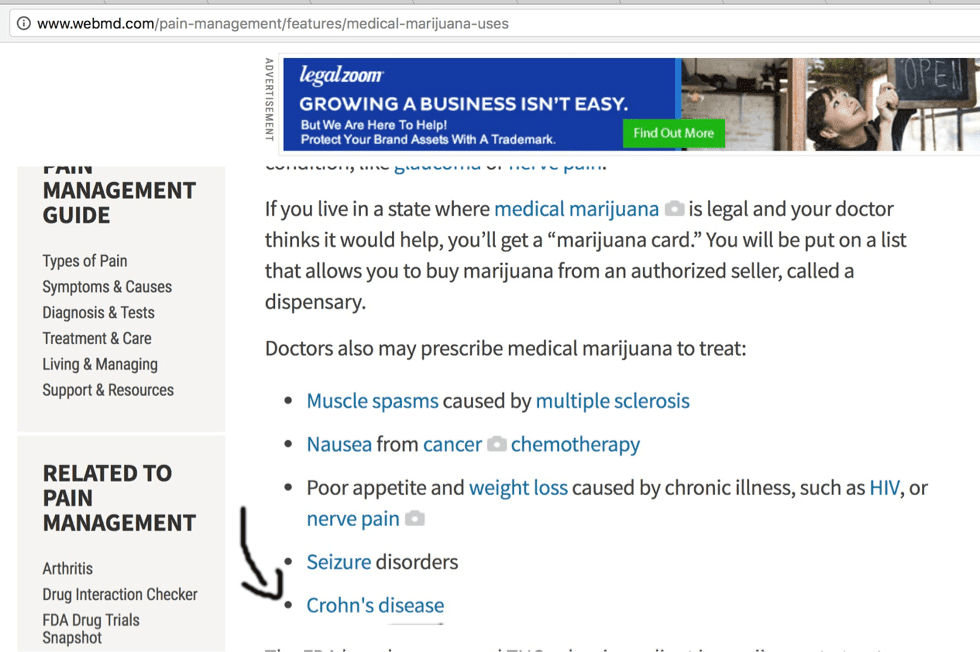
In all seriousness, the list of conditions that can potentially be helped with the aid of cannabis is vastly growing by the year Seriously, even WebMD says it…
Marijuana has become a big part of society politically and recreationally, but it’s been kept relatively quiet on the medical side.


Many patients with chronic conditions are finding relief from using cannabis and living a natural and healthy lifestyle. However, Cannabis is still not a well-known form of treatment for Crohn’s/Colitis. Many individuals with Crohn’s/Colitis are finding relief from their major symptoms such as stomach cramping and that impending sense of urgency.

Patients have also reported that since begun using cannabis they’ve seen it reduce their nausea and help them to gain back their appetite – but I guess that quality could land on either side of the fence. Cannabis is a natural form of medicine that could serve as an alternative to the long list of drugs that a patient is currently being prescribed.

Dane, the founder of CClifestyle, said, “I don’t think Marijuana was ever able to help my Crohns/Colitis directly – if anything I think I might of gained a sensitivity to it and seen an increase in symptoms…However, in my roughest moments, there was nothing better to help me relax, sleep and reduce pain. Indirectly, it was a lifesaver.”

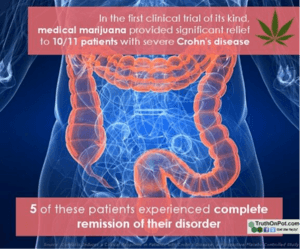
Dr. Timna Naftali based out of Meir Medical Center in Israel has been conducting this research for many years now. He focuses on IBD and how cannabis could help control symptoms.  He recently conducted a study where he used patients who had recently stopped responding to commonly used pharmaceuticals to treat Crohn’s.

One group was given a placebo, which was marijuana with the THC removed. The other group was given marijuana in the form of cigarettes with the THC. Ten of the eleven patients given the THC reported that they had improvement on their symptoms. They reported that they had less sleepless nights, a better appetite and more relaxation. Five of the eleven patients in the group given the marijuana cigarettes with THC reported they had complete remission from their symptoms. The results from this study are outstanding! These patients had completely stopped responding to their pharmaceuticals however found so much relief using cannabis.
So this all sounds pretty delightful, one treatment that’s all natural, relief of symptoms, possible large reduction in symptoms and a bit fun? Figuring this possible treatment out might not be such a bad idea. These next steps will help guide you in your quest to know if Medical Marijuana is for you.

1. Connect with the right physician

Finding the right doctor can be difficult, worst comes to worst you can always hit up Snoop for some advice via twitter but first lets see what other feasible options we have.

Health care is expensive so finding a doctor you connect with is important. The key to finding the right caregiver for this situation is research. Finding a specialist who focuses on Crohn’s/Colitis yet open minded to alternative solutions could be the most important step. Look for someone in your area who has conducted research on medical marijuana as it relates.

A great example of one of these alternative practitioners would be MMJ Doctor – http://mmjdoctor.com, they have an office based out of San Francisco & San Jose, California. MMJ Doctor’s website separates many conditions by category and also gives an explanation on how cannabis could help treatment. Another helpful resource is Dr. Rachana Patel’s website http://www.drrachnapatel.com Dr. Patel is based out Walnut Creek, California and her website goes into great detail about her background and why she believes so strongly in the benefits of using cannabis. Her page also has a very useful FAQ section where she goes over common misconceptions about medical marijuana.

Many physicians outside of the United States have been conducting research with THC for years now.


This could be tricky in the U.S. as many states have not legalized medical marijuana. Luckily there is a lot of information online and the possibility of having an appointment over the phone with a physician who may be a little too far away. This task may be a little daunting because no one wants to be labeled as a “Pot Head” or an abuser of the law, but we do want to be educated on the facts. In that sense this doesn’t have to be more than an informative conversation.

2. Using Cannabis as Treatment

There are many different ways you can use cannabis as treatment for Crohn’s and Colitis. It’s never really recommended that you smoke marijuana because inhaling any type of substance is not recommended for keeping your lungs healthy while also potentially inhibiting a healing response in the body. Remember, Marijuana is a depressant – it should be used lightly. Depending on your preferences many people use oils or vape pens or maybe a “bubbler” if needed to smoke. Be careful of edibles due to the fact we’re dealing with serious gut health issues. Edibles are usually not sugar free/gluten free/Dairy free and put a very strong inflammatory substance directly into the “war zone” of our gut.


Some dispensaries make edibles with healthy alternatives such as coconut flour, and almond milk. Some also tend to different dietary needs such as gluten free, dairy free, or vegan. If the dispensary does not offer these options or you just prefer to prepare your own food there are many different recipes online that incorporate medical marijuana into them. We’ve even found recipes for strawberry fruit strips!


The oil can be taken orally or applied topically for other conditions. There are many different ways to make your oil. Be aware of the absorption levels of the type of method you use. Sometimes the THC is absorbed into the body faster using different methods and varies from person to person. Expect to try a few different ways of consuming THC before you find what works best for you. Remember the first time you tried Alcohol? Yea it’s kinda like that – it’s not unusually for it to blow you off your socks and be in need of a close friend.


Point here is start small, use in a controlled and safe environment with people you trust. More is not always better!

3. Incorporating a Healthy Lifestyle

Eating clean, exercising regularly, and taking care of your body first and foremost will aid in the healing process more than cannabis – do not use this as a crutch but a value to a structured protocol. We recommend predominately using at night or when you have no more responsibilities. This way you can relax and let go of any obligations, you had a productive day, you follow your daily regimen, you fill out Dane’s Daily Healing Journal and built upon your personalized S.H.I.E.L.D. program… Now, treat yourself to a relaxing night!


We find that those who’s are exercise everyday, creating structure to their daily program and utilizing probiotics have much more success using Cannabis as medicine. If you’re not careful this could put you in a more depressed state, especially when used alone.


Key take-aways here is don’t rely on it, use it as part of a strong program. Focus on using after your day is done and with friends/family you enjoy. Let it be a gift to yourself for your hard work while giving you the environment to sleep better, laugh more, and enjoy life!

4. Seeing Results

Here comes the fun part! Your weeks, or even months of research and commitment are about to start paying off. You’ve been keeping up with your personalized S.H.I.E.L.D. program and you’ve even found the perfect way to use cannabis as a treatment option. With more of an appetite and less nausea, it’s time to get creative with your meals and have some fun with it


Pinterest has tons of different recipes for meal prepping that are tasty and have lots of nutrition as well. They have plenty of recipes on how to change up some bland meals and plenty of vegetarian and vegan options as well.


Keep track of how your nights and days go when you smoke and when you didn’t smoke. We’ve had plenty of fellow Crohnie’s who say it’s the only way they can sleep through the night or reduce pain. On the other hand we’ve had people who see it makes it much worse! We’ve even had people like our founder Dane who said he has some benefits but none having a direct healing effect on his symptoms.


What can we take away? Personalize it, keep an open mind…and make sure you have all three Lord of the Rings movies on standby if Medical Marijuana is for you!


Happy Healing!


CCLifestyle Team

Source for clinical study by Doctor Naftali: https://www.ncbi.nlm.nih.gov/pubmed/23648372
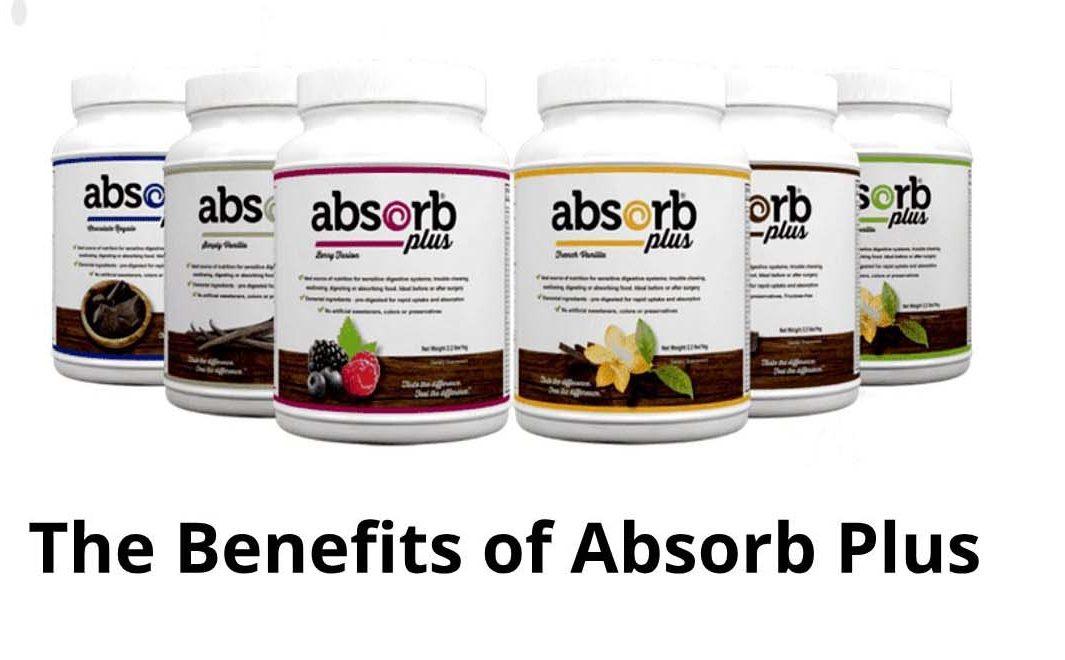
The Benefits of Absorb Plus

We’ve all tried a million protein shakes which at times, seemingly made Crohn’s and Colitis worse! Time and time again, the universe proves you can’t put health in a bottle…


One Crohn’s/Colitis warrior might have come up with the closest recipe yet to a healing nutritionist shake. Jini Patel Thompson, founder ofListenToYourGut, created a meal replacement shake with the sole purpose of reversing symptoms from IBD.

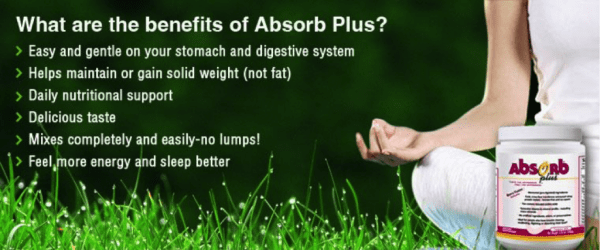
Absorb Plus might be the answer to our inability to eat whole foods during a flare or even as a way to maintain our good health without negative effects. Absorb Plus is a predigested elemental mixture  that allows for quick and effective absorption without causing an inflammatory response like most foods or shakes on the market. This shake is Gluten Free, Soy Free, 99% Casein/Lactose Free and has no artificial flavors or sweeteners. Not only can it be instrumental in the healing process but many have reported they have been able to gain up to 40 lbs of lean weight using Absorb Plus! Both Jini, Dane and thousands of others have utilized Absorb Plus successfully to reduce flares, add a quick alternative meal, increase options while traveling and sustain energy through life’s stressful times.

The Facts

Absorb Plus is a great resource for getting all the nutrition you need while keeping your stomach at ease – this healing shake is able to enter the bloodstream within 15-20 minutes because of its predigested nature. This is especially important for us with compromised digestion.


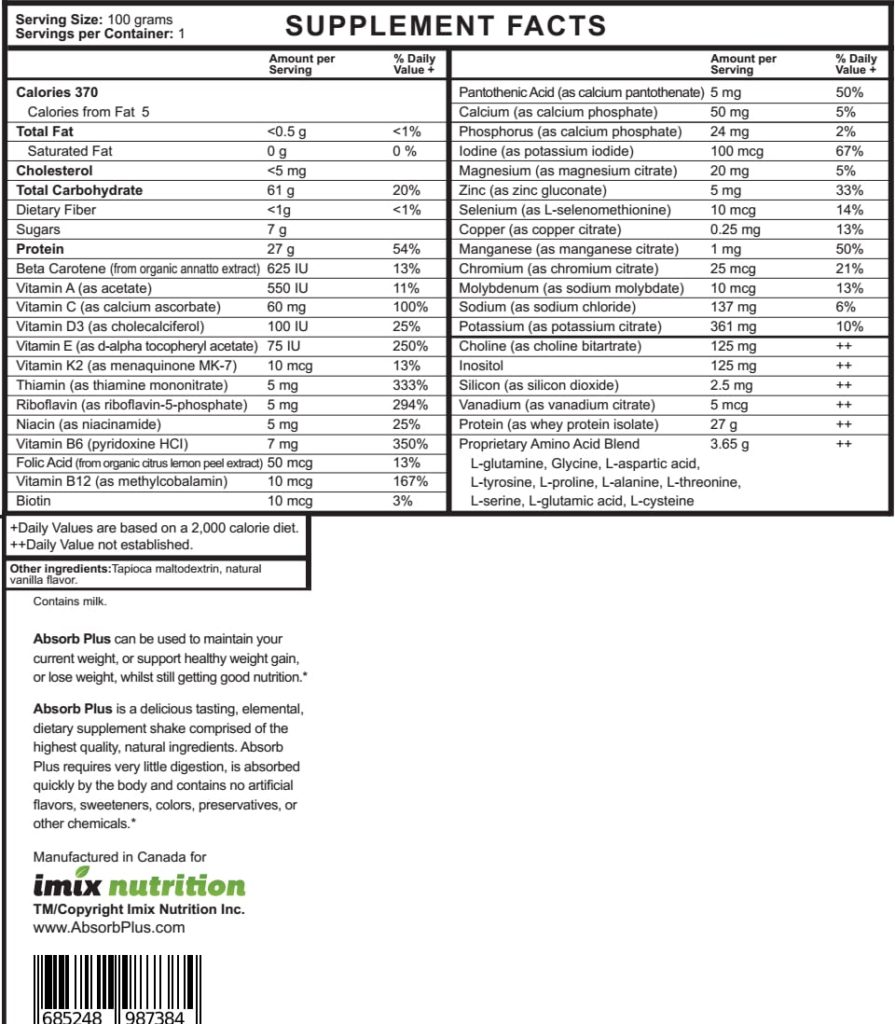
It’s gluten free, lectin free, non-GMO, high in vitamins/minerals, complete profile of amino acids, and extremely carbohydrate dense. The density of carbs comes from Tapioca (cassava root) Maltodextrin which provides the fuel we desperately need to regain energy and weight.


Although Maltodextrin has faced some negative publicity, it is the safest and most effective way to increase weight/energy without a negative side effect for us with IBD. Absorb Plus is also made with Whey Isolate which many of us have been worried about – as we know Diary is a “STOP SIGN” for most.

The Whey Isolate found in Absorb Plus is a form of Whey which has had the Casein and Lactose removed – the sugar and protein component that many of us are unable to digest in milk. Due to this procedure and the quality of whey isolate utilized (cold-extracted), it is highly unlikely you will have negative effects from Absorb Plus. Unless you have an extreme allergy to dairy – this should be an effective substitute to gain weight, add complete amino acid profile and eliminate inflammatory responses.


If you absolutely cannot tolerate dairy, there are Vegan Kits you can buy to mix together your own shakes and Jini is currently formulating a vegan version of Absorb Plus.


Jini decided not to put any kinds of fats in the Absorb Plus due to the hardships many of us face digesting fats. Rest assured if you have any issues with digesting fats this product is free of any – we recommend adding Cold Pressed Udo’s Oil to this healing shake once you feel you can absorb fats. This plant based omega is extremely gentle and nourishing

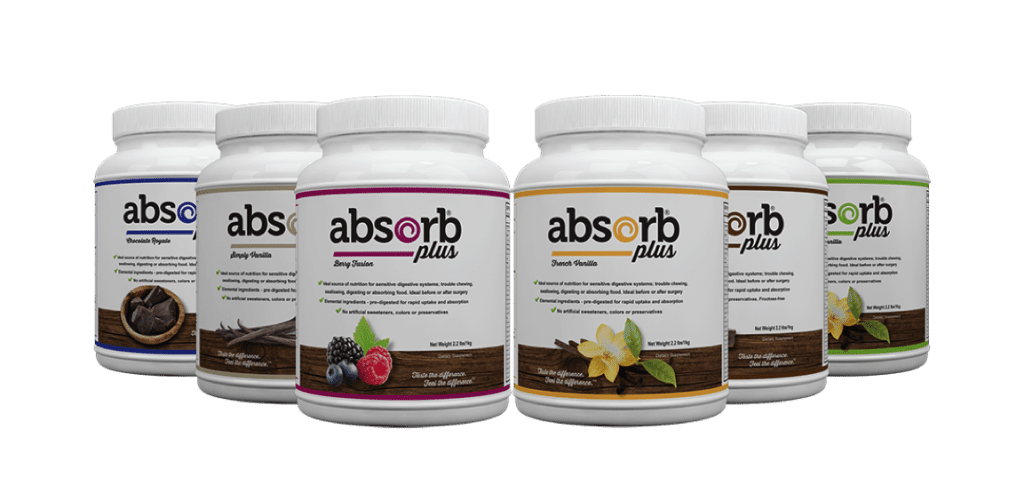
Absorb Plus is an healing shake that surprisingly has a great taste – we love the Berry Fusion & Chocolate most 😉 It comes in six different flavors –  French Vanilla, Unsweetened Vanilla (cleanest version), Chocolate Royale, Berry Fusion, Simply Vanilla, and Simply Chocolate. There really is something for everyone and perfect flavors for mixing in different ingredients for smoothies!

Nutritional Benefits

So we briefly touched on the nutritional benefits above but let’s dig a bit deeper…


When in a flare eating “normal foods” can sound absolutely terrible. Depending on how severe the flare is you might be staying away from non-liquid foods altogether. Your body needs roughly 2,000 calories a day to stay healthy and functioning. Your personalized S.H.I.E.L.Dplan will contain many options including diet, supplements, herbs and so forth… Absorb Plus is part of a strong healing program but it’s not the whole kit and caboodle 😉 .


Each flavor has between 360-370 calories per serving and it’s recommended that you add ingredients yourself to the shake, so roughly you only need about 4 shakes a day to meet your calories depending on the ingredients you include.  These shakes have all the vitamins, minerals, and nutrition you need to keep your body happy and healthy during a flare – if you’re considering a full elemental diet, we recommend you work with your health care practitioner.


If you just have increased symptoms, or like to keep a consistent breakfast, this is also a great option to start your day with something easy and safe.

Expectations

If you are using Absorb Plus as your tool for an elemental liquid diet, expect more loose a liquid bowel movements. This is not necessarily a bad reaction, this is still very healing for your body but when consuming nothing but liquids, be sure you understand what to expect 🙂 Any signs of Diarrhea or watery stools will decrease as you add more solids into your diet and healing is accomplished.


Absorb Plus is made to the highest quality which takes a few extra bucks to make, expect each tub to cost roughly $67 with a free tub when 6 or more are bought. We recommend getting more upfront so that you do not have days where you have run out. Many of Dane’s clients have run into this problem when this shake was the most helpful part of their program – don’t make this mistake if you’re relying on Absorb for getting you past a flare, especially if you live outside of North America.


Shipping and Handling can be very expensive outside of the U.S. & Canada. We recommend you have it shipped to a family member who can then ship to you if you are in Asia, Africa, China, etc… Absorb plus is not yet sold in stores or manufactured worldwide due to the complexity of their product (42 different ingredients!). Distributing a quality product around the world is a problem in today’s market.

Recipes for Success

So you have the powder and a blender and you’re ready to add in other ingredients! Remember, we recommend you try just the shake, then with Udo’s oil, then slowly add in other foods into the shake to assure your bodies ability to properly digest.  As far as what is easy on the body, Dane has made a YouTube video demonstrating a variety of foods you can add to your shakes HERE. A few key ingredients that are easy on the stomach are avocados and bananas. He also provides some great information about how different foods benefit the body and why.


Making the shakes may be a bit of a trial and error process for some. When trying out the shakes make sure to keep positive mind set when trying new recipes. A healing mindset and focusing on solution rather than current adversities is the true key to healing. There is no magic turn-key system for everyone in the world so take your time, be patient and work hard!

Conclusion

Here are some key take away points from this blog for your reference:


Benefits of Absorb Plus:

  • Specifically formulated for IBD
  • Predigested (Elemental Diet Certified)
  • No Artificial Flavors or Sweeteners
  • Gluten-Free, Soy-Free, 99% Casein/Lactose-Free (safe whey isolate used)
  • Increase Absorption (20 minutes into Blood Stream)
  • No Oil (Perfect for those with a fat intolerance)
  • Gain Muscle Weight
  • Effective for those in Critical Condition

(Consult health care physician for personalized protocol) Risks of Protein Shakes: 

  • Hidden Irritants causing inflammation
  • Not very digestible for IBD
  • Increase in Diarrhea, Cramping, Bloating (Even Organic/Vegan)
  • High Cost, Low Actual Value For You
  • Increased Systemic Immune System Reaction
  • Increase Sensitivity to Food

Lowering Risk of Protein Powders

  • Take Independently until comfortable with reaction
  • If Whey Protein – only use Whey Isolate certified by professional
  • Vegan must be Sprouted, (pea/rice protein)
  • Do not take with Whole Food Meal
  • Mix with Room Temperature Filtered Water

There are clear benefits of using the right Healing Shake for dealing with IBD. It can be an extremely powerful tool when used properly. I highly recommend you work with a Health Care Practitioner to build your protocol. My gut tells me you going to see great results!

Plant Paradox Book Review: Can Lectins Be the Root Cause of your IBD?

What Every Crohns/Colitis Patient Should Know About These Gut-Disrupting Molecules and How the Plant Paradox Diet Can Help.

SCD. AIP. GAPS. These 3 diets are considered the “Big 3” when it comes to healing the gut. They remove common offending foods and promote intestinal healing with nourishing foods like bone broth, wild caught meat, and an assortment of fruits and vegetables.

But not everyone gets better on these diets. And for a long time practitioners couldn’t understand why.

Enter Dr. Steven Gundry. A famed cardiac surgeon and founder of the Center for Restorative Medicine in California, Dr. Gundry may have just provided the missing piece. In his book, The Plant Paradox, he discusses how some of the “healthiest” foods can actually be the root cause of many chronic illnesses, including inflammatory bowel disease. Foods like tomatoes, peppers, beans, and even certain fruits and squashes can cause inflammation throughout the body. It is the inclusion of these foods, says Dr. Gundry, that has helped cause a massive wave of autoimmunity, especially in the Western world.

“Many foods, including those that contain lectins, have both good and bad properties. Additionally, individuals have different tolerances for lectins depending upon the state of their health…it’s become clear to me that lectins are leading the charge in the war within your body”

Furthermore, Dr. Gundry states:

“Even when organically raised, certain lectin-heavy foods are the cause of so-called autoimmune diseases, while lectin avoidance in my patients and as reported in scientific literature has been found to cure autoimmune disease.”

Cure autoimmune disease? Just from removing lectins? What in the world are lectins? Founder of CrohnsColitisLifestyle, Dane Johnson, helps us learn the answers to these questions and more in his interview with Dr. Gundry. Read on as we take a dive into the subtle battles between plants and animals.

Crohn's / Colitis and Lectin Connection with Dr. Gundry

So what are lectins?


Lectins are a type of protein in the skin, seeds, rinds and leaves of plants that bind to certain sugar molecules when consumed by an animal (including us humans!). They are found in grains, legumes, nightshade vegetables, squashes, and even certain fruits. Interestingly, they are also found in dairy products like milk.


When lectins bind to molecules in the body, this sets off an inflammatory reaction via multiple mechanisms. Plants do this to protect themselves. They are, as Dr. Gundry states in his interview with Dane, “chemists of incredible ability.”

Currently, on the market, there is a product called Charlotte’s Web which was created by the Stanley brothers. Their product is sohigh in CBD that if you were drug tested no traces of marijuana would show up in your system. It can be sold anywhere as an anti-inflammatory and could be a product that you should look into!Just like all forms of life, plants want to live long enough to reproduce and carry on their genetic information. If an animal is ravaging a given plant, devouring its leaves and its “babies”, the future of the plant is in threat. Thus, plants have come up with creative strategies to get around this by inflaming the animals that eat them. Plants make animals sick via multiple mechanisms. They can do this acutely – think about what happens to people who eat uncooked beans. They can become violently ill, and many have even died. Or, it can occur more subtly, by slowly inducing autoimmunity. The three main ways are:


1.    Causing intestinal permeability

2.   Disrupting cellular communication

3.   Molecular mimicry.

Understanding these three pathways (especially 1 and 3), says Gundry, is the key to grasping the autoimmune process. When a high-lectin food (like a tomato, for instance) is consumed, it can cause a small amount of “leakiness” in the gut wall. Over time, with repeated exposure to the food, this can lead to undigested particles of the food to enter the bloodstream.


This by itself is a bad thing.


When undigested food particles enter the bloodstream, the immune system goes on high alert and sends out the Armed Forces to investigate the situation and take out the “intruder.” They do this via the release of antibodies. The antibodies bind to the tomato proteins, either destroy them or neutralize them, and allow the body to get rid of them. Repeated exposure to the food causes the immune system to remain on high alert.


This results in chronic inflammation and swelling in the intestinal tract, which sets the stage for digestive problems.


But, as Gundry says, plants are more devious than just opening the gut wall:

"The most dangerous trick pulled by lectins, which I now see on a daily basis in my patients is that they bear an uncanny similarity to the proteins on many of our important organs, nerves, and joints.”

This is known as “molecular mimicry”, and it’s often how the autoimmune process begins.


When the Armed Forces are stuck on “high alert”, the immune system can start attacking proteins in the body that look similar to the lectins. One way to picture this is to think of a jumpy, overactive gunman in a battle. Let’s say the enemy was wearing red jackets. Now picture the gunman is fighting in the middle of a hurricane and he’s overwhelmed by the opposing (red coated) troops. Blinded by the wind and rain (inflammation), and fearing that the enemy is about to take over, he starts shooting his gun wildly at anything that looks similar to a red jacket. Anything with red in it becomes collateral damage, and other things are destroyed in the process.


This is what can occur in the body.

One classic example is with gluten and certain patients with Hashimoto’s thyroid disease. For some patients with thyroid disease, the body mistakes the thyroid gland for gluten due to, you guessed it, molecular mimicry. The molecules of gluten (an extremely common lectin found in wheat, rye, and barley) can mimic the molecules of the thyroid gland, and an overactive immune system can have trouble telling the difference. The collateral damage in this case is a slow destruction of the thyroid gland and subsequent loss of thyroid function.


Another common case is patients with autoimmune arthritis. For these patients the lectins in the nightshade family of vegetables can mimic the tissue of the joints. Removal of nightshades (tomatoes, eggplant, peppers, potatoes, goji berries) from the diet can help tame the immune system and restore what’s known as “immune tolerance,” the ability for the immune system to accurately distinguish friend from foe and tolerate its own tissues.


Celiac disease is another autoimmune condition with ties to molecular mimicry, and this also is caused by the pesky lectin in wheat, rye, and barley: gluten. Because of this propensity to cause trouble in the GI tract, Dr. Gundry advises IBD patients to keep gluten off the menu.

Alright! So that was the summary on how lectins in the diet can cause inflammation and contribute to autoimmune disease. But what in the world should a Crohn’s/Colitis patient do about it? Does this mean every IBD patient should never eat tomatoes or eggplant again? Now that we understand how foods can stimulate inflammation in the body, let’s see what we can do about it!


It’s important to note that Dr. Gundry does make a point in his book that perhaps we shouldn’t try to eliminate all lectins in the diet. That would be a massive undertaking and would severely limit our food choices. Moreover, he discusses that lectins, in small doses, can have what’s known as a “hormetic” effect. This is where a stress on the body in small doses can actually produce a net benefit. Think exercise, cold showers, and sauna use. In small to moderate doses, these can be incredibly healing practices. Exercising for 5 or 6 hours every day for years on end, however, would be harmful, especially to a body that is trying to heal. This is why the standard American diet is so harsh on the intestines; most people eat wheat (a very high lectin food) 2-3 times a day (cereal for breakfast, sandwich for lunch, pasta for dinner).


So what can a Crohn’s/Colitis patient do to limit the harmful effects of lectins in his or her diet?

Top 6 Lectin Free Take-Aways

1. First, be very careful with skins and seeds. Most plants store their lectins in the skins and seeds, with nightshades and squashes being the most common examples. It’s advisable to peel the skin of any nightshade vegetable (tomato, eggplant, pepper, and potato) and squash, and when possible, remove all seeds before consuming. This would also include vegetables like cucumbers, too. (Note: sweet potatoes are a different plant than normal potatoes and are exempt from this). For patients with active moderate to severe disease, Gundry says it is advisable to avoid the nightshades and squashes completely for a period of time, if not forever.

2. Avoid all grains and “pseudo-grains”, aside from millet and sorghum. Dr. Gundry describes the grain family as the worst of the lectin offenders. This includes not just the gluten containing grains, but also oats, corn, rice, quinoa, buckwheat, and others. Not only do these grains cause inflammation in the gut, but they also can “cross-react” with gluten itself and cause worsened intestinal permeability in patients with gluten sensitivity. This means if you have gluten sensitivity, or the most severe form of this called celiac disease, you can have the same reaction in the body as if you were eating gluten when you eat other grains! Dr. Gundry says that millet and sorghum are two types of grains that don’t contain lectins, so these are safe to eat. Moreover, if your health has been in a good place, and you want to start reintroducing some grains, avoid the whole grains. Stick to white rice, particularly white basmati rice. A good bread to try would be organic artisan sourdough bread as this already has the bulk of the lectins predigested. Moreover, Gundry notes that many people who travel to Europe can tolerate grains much better than in the United States. There are multiple reasons for this, but the most likely reason involves the healthier farming practices that are mandated by the government. Less pesticides sprayed on the food = happier gut for you.

3. Avoid all legumes. This includes beans of all types, peas, cashews, and peanuts. Dr. Gundry cites numerous anecdotes of patients who drastically improved after removing the legume family. He also describes multiple scenarios where patients reintroduced legumes and had abrupt flare ups. Note: There is one safe way to consume legumes, which takes us to the fourth tip:

4. Buy and use a pressure cooker! Pressure cookers, such as the Instant Pot, remove all lectins from foods aside from those found in the gluten-containing grain family. But for beans, nightshades, non-gluten grains, and squashes pressure cooking is a fantastic way to reduce and even eliminate the lectin content. It’s still recommended to peel the skin and remove the seeds when possible. Soaking and sprouting grains or legumes whenever possible is also a plus, as this helps make them more easily digested. Dr. Gundry notes that the Eden Foods brand pressure cooks all of their beans before selling them. This means the lectins are already destroyed!

5. If choosing to consume dairy products, only consume those from grass-fed cows with A-2 casein (or sheep/dairy products). This includes the breed of cow known as the Jersey cow. Conventional dairy products are made from cows of different breeds which includes a highly gut-busting lectin known as A-1 casein. Much of the time the gastric distress that is caused by dairy is from the casein A-1 (lectin) and not the lactose (sugar). This is why many people still suffer from GI upset when switching to lactose-free milk. It is important to note that goat and sheep dairy products are naturally A-2 casein so these are considered low-lectin options. The best way to find out if the dairy products you are consuming are coming from Jersey breed cows is to buy local and ask the farmer what kind of breed they have. And remember, grass-fed is always better than grain-fed because, as Dr. Gundry says: “You are not just what you eat. You are what the thing you are eating, ate.” What he means in that tongue-twister is that if a cow is eating genetically modified grain products, then some of those lectins (and the pesticides sprayed on them) will end up in you!

6. Eat fruit only in season. This helps to keep the lectin content low and helps limit our intake of fructose, which can cause inflammation in susceptible patients. Gundry says there are 3 fruits that are on the menu more long-term as long as they are eaten when still green: bananas/plantains, mangoes, and papayas. Not only are they lower in sugar when still green, but also contain some resistant starch which helps to feed our good gut bacteria. The one fruit of notable exception is the avocado, which Dr. Gundry describes as “our dear friend.” The avocado is high in healthy fats, low in sugar, and can be used in many different dishes. Eating this fruit is highly encouraged.

Lectins beware! Our Crohn’s/Colitis Lifestyle patients are now on the lookout! Armed with valuable information from The Plant Paradox and Dane Johnson’s interview with Dr. Steven Gundry, we have a new tool in the arsenal in defending against inflammation from our food. Just to recap what we learned:


Plants want to live long and happy lives just like every other form of life. Over millions of years they have developed protective strategies to ward off predators (us!) and one of their main strategies has been the development of lectin proteins in their skins, seeds, rinds, and leaves. These lectins often make animals sick, thus keeping the plant alive long enough to reproduce and spread its offspring. The foods with the highest lectin content include grains, legumes, nightshade vegetables, squashes, and certain fruits. Limiting our total lectin intake will help reduce inflammation in our guts. We can do this by pressure cooking legumes, nightshades, and squashes, sticking to white rice and other “white” grains that have the hull removed, eating only pasture-raised animal products that aren’t fed grains, and peeling and de-seeding vegetables before eating.


While this may seem like a lot at first, remember that everyone is individual. Tomatoes may cause GI distress in one person, while black beans may cause it in another. This book isn’t here to scare you into never eating your favorite foods again. Instead use it as a tool to help modify your diet into one that fits YOU best. In times of stress or flare-ups, going strictly low-lectin/lectin-free may help you navigate until the storm passes. Then, as the flare up passes, reincorporating some pressure-cooked beans or sprouted sourdough bread might work for you. There is no one size fits all approach, and remember to be kind to yourself through the process. We are in this together, and we are here to help at CrohnsColitisLifestyle.

Becoming Acquainted with Medical Marijuana

More and more these days we hear about people with different conditions healing or finding relief through medical marijuana. The industry is starting to take off as many cities/states are legalizing the drug for recreational and medical uses. For so many years this “substance” has been labeled as an addictive gateway drug for outlaws. We have memories of the “druggies” at school and the horrid smell that makes you wonder if someone nearby had a terrible run-in with a skunk. These stereotypes are very popular because there is still unknown in the industry. 

Since the substance is illegal in most of the country, it has become hard for doctors and other professionals to study and research. Luckily many other countries are ahead of the game and have provided many studies and resources while the United States catches up.


If you’re new here, we suggest reading our first blog post about marijuana titled “Crohn’s, Colitis…and Marijuana!?”. That post scratches the surface of this awfully confusing industry on the rise for someone initially considering using marijuana to treat their chronic pain and if it could be the right option for you. Here we are going to dig a little deeper and discuss questions such as whether you should use Sativa or Indica, the difference between tetrahydrocannabinol (THC) and cannabidiol (CBD), and many other common questions!

Sativa or Indica?

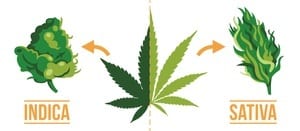
Usually, sativa is what is sold on the street because it typically grows very fast, can have a very quick turn-over rate and gives youthat typical high associated with marijuana. Sativa will most likely give you the most common and intense side effect you can get from marijuana. Get ready for it…The munchies. Sativa will most likely to be uplifting and cerebral but be ready to eat almost everything you have in your fridge – the last thing we want while trying to healing our symptoms. Indica usually is more relaxing and give you a full body effect. Indicia is typically consumed at night so either be ready for an extremely long nap or consume it at night before bed. If you’re having a hard time sleeping, dealing with chronic pain or a large amount of anxiety then this might be a fit for you.

What is the Difference Between THC and CBD?

CBD will have many healing aspects people with Crohn’s and Colitis are looking for and relax the body. Each strain will have traces of both whether the ratio is 99:1 or 50:50. This part could take some tweaking to really find what you’re looking for. There are many variables that go into getting a good mix and also many questions to be asked. Do you need a high CBD from an indica plant or a blend? What kind of blend? This is all personal preference and could take some trial and error to find what really works for your body and your needs.

Currently, on the market, there is a product called Charlotte’s Web which was created by the Stanley brothers. Their product is sohigh in CBD that if you were drug tested no traces of marijuana would show up in your system. It can be sold anywhere as an anti-inflammatory and could be a product that you should look into!

As previously mentioned in our other blog post “Crohns, Colitis…and Marijuana!?” there are many different ways to consume cannabis. It’s actually said that smoking the cannabis kills a lot of healing aspects of the marijuana and inhaling any type of substance is never ideal for your lung health. So a lot of patients utilizing this treatment either use edibles with their specific blend or make the cannabis into an oil. In some states the oil is sold at dispensaries however if you require a specific blend some people make their own at home using Rick Simpson’s Recipe that many people have had a lot of luck with. Doing your own research and seeing what works best for you will insure you get the exact results you’re looking for. Just like any medication a tolerance will be created and after a variable amount of time you’ll lose the “high” effect and just receive the healing benefits of the oil. Research shows that some people with Crohn’s and Colitis have seen positive results from the cannabis within three days while others took up to six weeks. Different dosages are all determined by your pain levels, and could also take some trial and error to determine when and how much you should be taking a day.

What are the side effects of using medical marijuana?

When this question was asked to Dr. Willmen, his response was “Around 150,000 people died because of medication overdoses this past year. These are people that went to a doctor something was prescribed to them they took it and the died this does not mean they were abusing the drug. Nobody has overdosed since legalization (of marijuana) it has no side effects at all with the exception of being high, getting the munchies, or being tired.” If you ask me that’s pretty good considering pharmaceuticals have so many scary side effects that sometimes even include death.

This treatment can fit right into your S.H.I.E.L.D Program and what may be effective for some people may not work for others. Trial and error are a big part of this process keep an open mind and have fun with it.

  • CC Lifestyle Team

Sources: Interview with Dr. Scott Willmen